
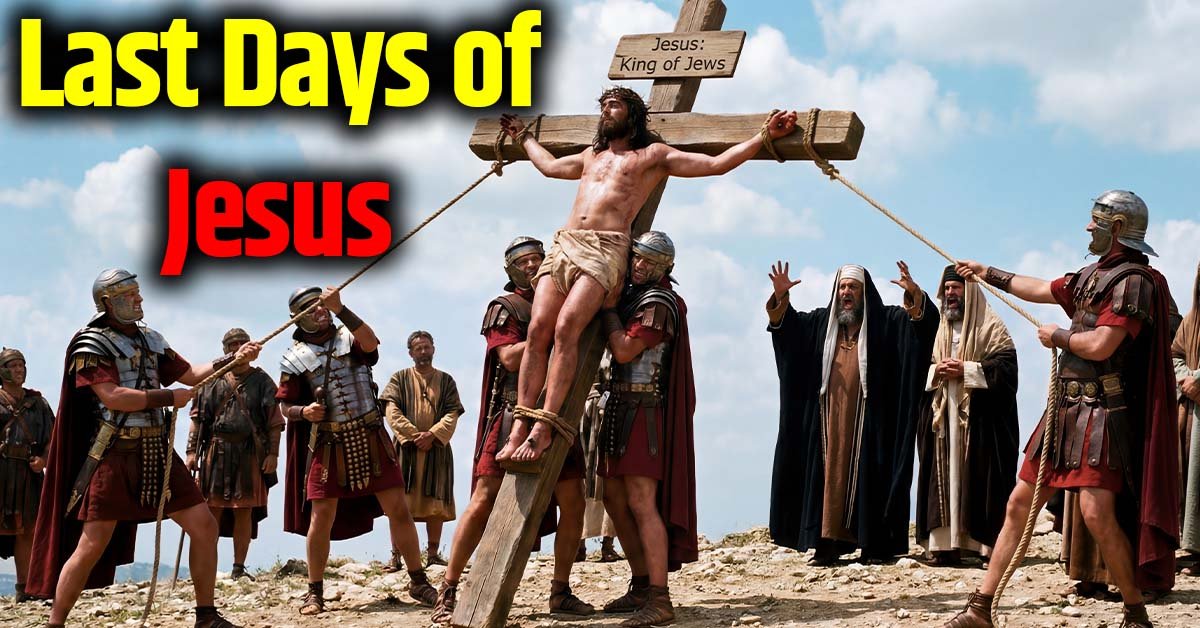
Triumphal Entry into Jerusalem
Five days before the Crucifixion—on March 30, 33 CE—Jesus entered the city of Jerusalem in Palestine along with His disciples. The last days of Jesus were spent in Jerusalem. He had come to the holy city to celebrate the Feast of Passover. As He entered, the people of the city welcomed Him with great enthusiasm. They spread palm branches on the road before Him and joyfully proclaimed that the Messiah promised by God had finally arrived. Many declared Him a prophet and openly announced their intention to follow Him.
Jesus then went directly to the Temple of Solomon, which at that time was considered the holiest site and the House of God by both the Jews and the followers of Jesus.
The priests of the Temple, especially the High Priest, who held the highest religious authority in Judaism, felt deeply threatened when they saw the people of Jerusalem turning towards Jesus instead of following them. They feared that their influence and authority were slipping away.
That day, after visiting the Temple, Jesus returned to a village slightly outside Jerusalem called Bethany, where He spent the night.
This is the perspective of the Christian tradition regarding the events leading to the crucifixion of Jesus. In this article, we will also discuss the viewpoints of Judaism, Islam, and the Ahmadiyya community about the crucifixion of Jesus and the belief in His return. For now, let us continue with the Christian narrative.
Documentary: Last Days of Jesus
Early Life and Prophethood
In reality, Jesus was born in the village of Bethlehem, about ten kilometers from the city of Jerusalem. After His birth, His honorable mother Mary took Him to Egypt. Later, they moved to another city in Palestine called Galilee. During this period, Jesus grew into adulthood, and when He was granted prophethood, He began preaching the religion of God.
At that time, the Temple of Solomon in Jerusalem held the greatest sacred importance in the Jewish world. Therefore, when Jesus reached the age of thirty-three, He set out for Jerusalem with the intention of preaching at the Temple. He stayed there for five days.
Clearing the Temple
On the second day of His stay—Monday—Jesus again visited the holy Temple. There He witnessed people selling animals and money changers operating their stalls within the sacred precincts. This deeply troubled Him because a place meant for worship had been turned into a marketplace. Unfortunately, all of this was happening with the permission of the religious authorities who lived there, as they themselves shared in the profits of this marketplace.
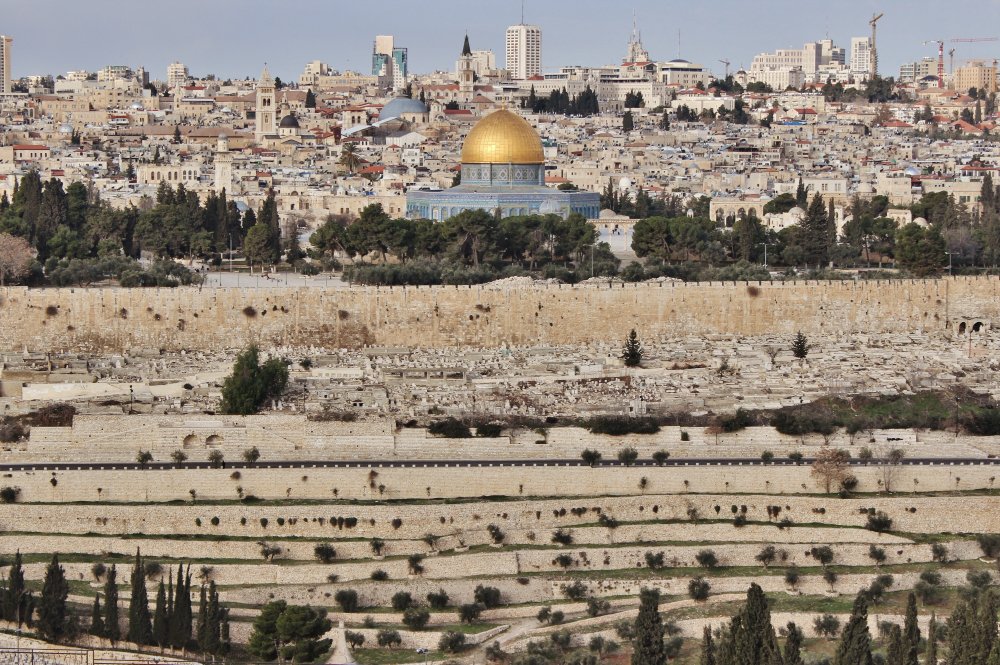
Seeing this, Jesus became angered. He overturned the tables set up for business and addressed the people, saying that this sacred house was meant for prayer, but they had turned it into a den of thieves. He then taught them the commandments of God, and the people began to listen attentively to His words.
However, the priests of the Temple—especially the High Priest, Caiaphas—became extremely hostile after hearing Jesus. Caiaphas soon began contemplating a plan to have Jesus killed.
Mount of Olives & Judas’ Betrayal
The third day of Jesus’ stay in Jerusalem, Tuesday, was very busy. On this day, He engaged in debates with the religious leaders at the Temple and told the people that these leaders were acting hypocritically.
Later, Jesus went to the Mount of Olives, near Jerusalem, and delivered a long sermon to the people, in which He spoke about the Day of Judgment and the coming of the Messiah.
However, on the same day, one of His disciples, Judas, met with the religious leaders, who agreed to “buy” him for thirty pieces of silver. Judas consented to help them arrest Jesus.
In the evening, Jesus returned to Bethany.
Wednesday was His fourth day in Jerusalem. On this day, He stayed in Bethany and spent time with His disciples. Meanwhile, the religious leaders of the Temple had completed all preparations to have Him killed, with Judas collaborating with them to plan His arrest. Because Jesus spent this day quietly at home, in Christian tradition it is referred to as Silent Wednesday.
Last Supper
In Christianity, the fifth day of Jesus’ stay is considered very important because on this day, He shared His Last Supper with His twelve disciples.
This was the day when the Jews in Jerusalem were celebrating Passover, the festival of liberation.
During the meal, Jesus took bread, broke it, and said:
“This is My body, which is given for you.”
Then He took a cup and said:
“This is My blood… a new covenant.”
The ritual of eating the bread and drinking from the cup continues to hold a highly sacred place in Christianity to this day.
During the meal, Jesus suddenly said that one of His disciples would betray Him. The disciples were shocked and wondered who it could be. Jesus, however, was pointing toward Judas. After a short while, following the agreed plan, Judas left and went to the religious leaders of the Temple to inform them about Jesus.
Meanwhile, Jesus gave His final teachings to His disciples, instructing them to maintain love, service to one another, and a strong relationship with God.
He also told His special disciple Peter that on that night, Peter would deny Him three times.

Gethsemane: Prayer and Arrest
After finishing the meal, Jesus took His disciples outside the city to a garden at the foot of the Mount of Olives. The night was cold. He instructed His three closest disciples—Peter, James, and John—to stay awake and pray.
Jesus then went a little apart and began to pray, bowing down in submission before God. According to Christian tradition, He prayed with such intensity that His sweat fell like drops of blood. Meanwhile, His disciples fell asleep.
At the same time, the religious leaders of the Temple, accompanied by the Roman soldiers, set out to find Jesus with the help of one of His disciples. They had already learned that He was in the garden at the foot of the Mount of Olives. Soon, they arrived at the same place, carrying torches to light their way.
In the light of the torches, Judas stepped forward and kissed Jesus’ hand as a sign of respect, but this was a betrayal—he signaled to the soldiers that this was Jesus. The soldiers immediately surrounded Him.
One of Jesus’ followers, Peter, drew a sword and struck one of the soldiers, cutting off his ear. However, Jesus stopped him, saying: “No, do not do this. Those who live by the sword will die by the sword.”
Jesus then touched the wounded soldier, healed his ear, and restored him to full health. This was His final miracle, as God had granted Him the power to perform various miracles.
Upon seeing the soldiers, all of Jesus’ disciples fled the scene.
The soldiers arrested Jesus and took Him back to the city. Peter followed at a distance, weeping as he went.
Trials Before Caiaphas and Pilate
Jesus was first taken to the house of the High Priest, Caiaphas. The religious leaders there told him that Jesus claimed to be the Son of God, calling Himself the Messiah promised in the Old Scriptures. They accused Him of insulting God and religion and argued that He should be put to death.
It is important to note that, according to Christian belief, Jesus is indeed the Son of God. Christianity holds that Jesus spoke the truth when He made this claim. However, at that time, the Jewish religious authorities, who held significant power, believed that anyone claiming such a thing was committing blasphemy and deserved the death penalty.
When Jesus was brought into Caiaphas’ house, Peter was sitting outside. People recognized him as a follower of Jesus and confronted him. Out of fear, Peter denied knowing Jesus three times. According to Christian tradition, this fulfilled the prophecy Jesus had made about Peter during the Last Supper—that Peter would deny Him three times that very night.
The religious leaders and the High Priest did not have the authority to sentence Jesus to death on their own. For that, they needed the approval of the Roman governor, Pontius Pilate, who was in charge of Jerusalem at the time, as it was under Roman rule. However, the Roman governor rarely interfered in religious matters.
To involve Pilate, the Jewish priests devised a scheme, claiming that Jesus was calling Himself the King of the Jews. The High Priest hoped that this would politically alarm Pilate, making it appear that Jesus was trying to rebel and claim kingship, justifying the death penalty.
Pilate summoned Jesus and asked Him, “Are you the King of the Jews?”
Jesus replied, “My kingdom is not of this world.”
Pilate found no crime in Jesus. However, the public outside was growing increasingly hostile toward Him. To avoid the rising pressure, Pilate sent Jesus to Herod Antipas, the ruler of Galilee, who had come to Jerusalem to observe the Passover festival. Since Jesus was also from Galilee, Pilate thought it appropriate to send Him to Herod.
Herod Antipas mocked Jesus and caused Him discomfort but found no political crime, so He sent Him back to Pilate. Meanwhile, a large crowd continued to follow Jesus, demanding His punishment.
Pilate found himself in a difficult position. He did not want to sentence an innocent man to death but was under immense pressure from the crowd. To save Jesus, he devised a plan. He announced that during every Passover, he would release one prisoner sentenced to death. He intended to do the same this time.
Pilate asked the people, “Whom do you want me to release—Barabbas or Jesus?”
The crowd shouted unanimously, “Barabbas! Barabbas!”
Barabbas was a robber and a murderer who had caused great harm, yet the people chose to release him over Jesus.
As a result, Pilate sentenced Jesus to death. The religious leaders then forcibly placed a crown of iron thorns on His head and mocked Him, saying He was the King of the Jews. The crown caused Jesus’ head to bleed heavily.
By this time, it was Friday morning.
Crucifixion at Golgotha
The religious leaders and soldiers placed a heavy wooden cross on Jesus’ body and ordered Him to carry it Himself to the execution site outside the city.

Jesus lifted the cross and began walking through the streets of Jerusalem. A crowd followed Him, mocking and insulting Him, while His followers stood along the streets weeping. Jesus addressed the crying women, saying:
“Do not weep for Me… weep for yourselves and your children.”
He was then taken outside the city to a place of execution called Golgotha. Two criminals had already been crucified there.
The soldiers laid the cross on the ground, laid Jesus on it, and nailed His hands to the side beams, while His feet were cruelly nailed to the lower part of the cross.
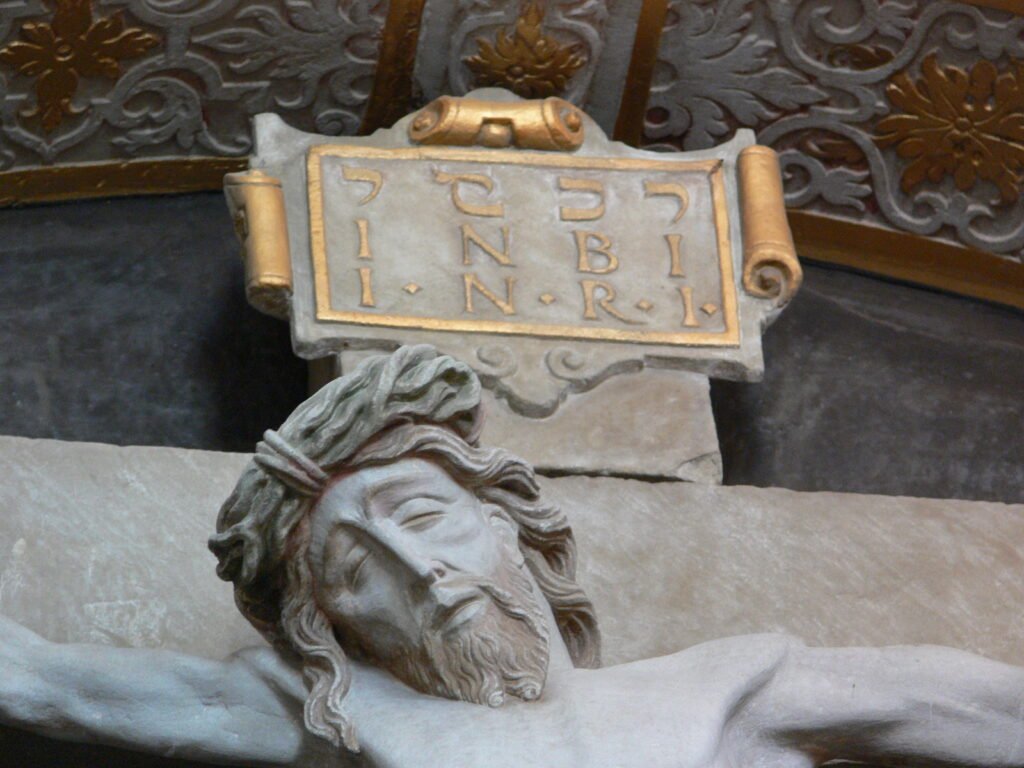
To mock Him further, the religious leaders ordered a sign to be placed above His head on the cross that read:
“Jesus: King of the Jews.”
Jesus endured all these sufferings by the will of God.
According to Christian history, the religious leaders at the site continued to mock Him, saying: “If you are the Son of God, come down and save Yourself!”
Jesus Last Words
Christian tradition records that Jesus spoke seven important phrases from the cross, some of which are…
“Father, forgive them… they do not know what they are doing.”
“My God, my God, why have You forsaken me?”
“I am thirsty.”
“Father… into Your hands I commit my spirit.”
According to Christian tradition, these were the last words of Jesus.
Death, Burial, and Resurrection
Christian belief holds that Jesus died on the cross and was then buried in a garden. Three days later, He rose from the dead and appeared to His special disciples for forty days before ascending to heaven.
Followers of Christianity believe that when the world becomes filled with oppression and corruption, and the end of the world approaches, the Antichrist (Dajjal) will appear and spread evil. At that time, Jesus will return, defeat the Antichrist, eliminate injustice, and establish righteousness in the world. After this, the Day of Judgment will occur.
This is the belief and perspective of Christianity regarding the death of Jesus.
Judaism’s Perspective
In contrast, followers of Judaism do not accept the prophethood of Jesus. They reject the Christian claim that Jesus is the Son of God, considering such a statement blasphemous. Most Jews also deny that Jesus was a prophet, although some Jewish sects recognize Him merely as a righteous and pious man.
Jesus in Islam
Islam, however, accords Jesus a prominent status as a great prophet. The most sacred book of Islam, the Qur’an, provides detailed accounts of the birth of Jesus and the events surrounding the crucifixion. Interestingly, the Qur’an contains only one chapter named after a woman, and that honor is given to Mary (Maryam), the mother of Jesus.
According to followers of Islam, some Jews accused Jesus of claiming to be the Son of God, and based on this allegation, a case was brought against Him. Muslims believe that Jesus never claimed to be the Son of God; the accusation was made by the Jews.
Islam teaches that while the Jews did conspire to kill Jesus and have Him crucified, God protected Him. Another person was made to appear like Jesus and was crucified in His place, while the real Jesus was raised bodily to the heavens by God. He is still alive and, near the end of times, will return to Earth. His return is prophesied to occur in Damascus, Syria, where He will defeat the Antichrist (Dajjal), end injustice and corruption, and, together with the Mahdi, establish justice across the world. After ruling for a period, He will pass away in Medina.
Jesus in Ahmadiyya
According to the Ahmadiyya Qadiani community, Jesus was indeed placed on the cross, but He did not die there. He survived in an unconscious state, left the Jewish territories, and traveled east to Iran, Afghanistan, and Kashmir, where He passed away a natural death in the Rozabal area of Srinagar. Ahmadis regard the tomb of Yuz Asaf in Srinagar as the actual tomb of Jesus.
Ahmadiyya belief further holds that Jesus did not ascend bodily to heaven and will not return to Earth before the Day of Judgment. According to their teachings, the Messiah and the Mahdi who were to appear are considered to be Mirza Ghulam Ahmad Qadiani.
Mirza Ghulam Ahmad’s Life and Claims: Messiah, Mahdi, and Early Ahmadiyya Movement
History of the Ahmadiyya Qadiani Movement: From Declaring Others Non-Muslim to Facing Exclusion
References:
- Andrade, Nathanael J. Killing the Messiah: The Trial and Crucifixion of Jesus of Nazareth. Oxford: Oxford University Press, 2025.
- Rahim, Muhammad Ata’ur-, and Ahmad Thomson. Jesus, Prophet of Islam. London: Ta-Ha Publishers Ltd., 1996.
- Ahmadiyya Movement in Islam. Jesus in Kashmir. London: Ahmadiyya Anjuman Isha‘at Islam Lahore, 2023.