
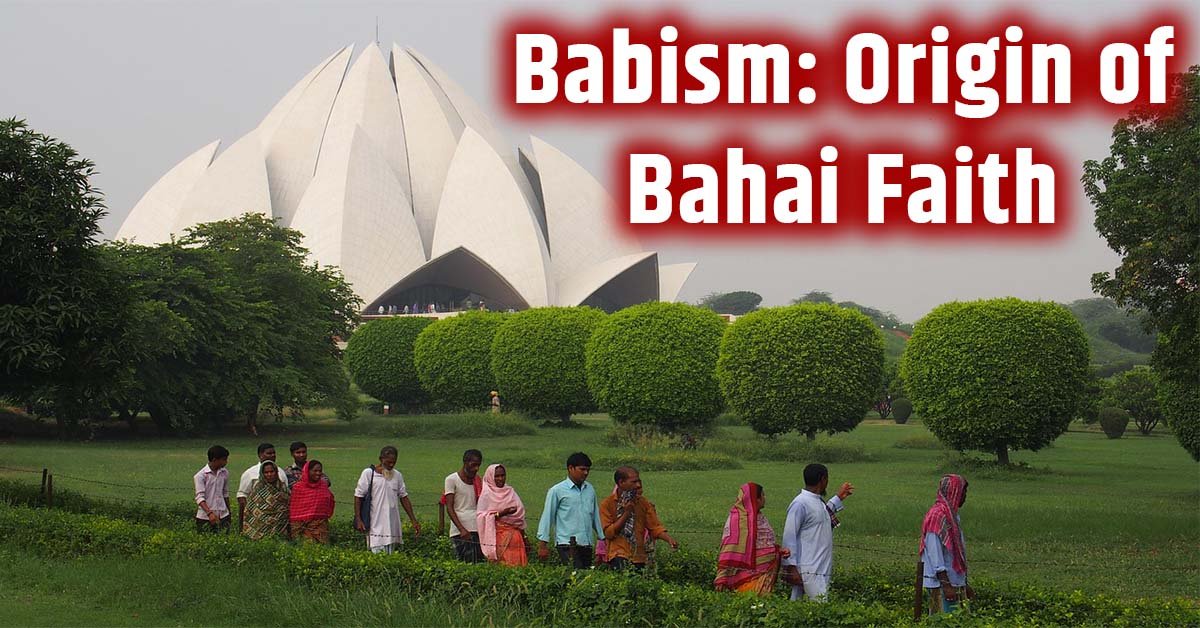
Introduction: The Birth of Bābism in 19th Century Iran
On 22 May 1844, in the Iranian city of Shiraz, a 24-year-old young merchant, Sayyid ʿAlī Muḥammad Shīrāzī, declared that he was the Bāb—the gateway or intermediary to the Hidden Imam, that is, the Twelfth Imam (Imam al-Mahdi) of Twelver Shiʿa Islam. Following this claim, people began to follow him and came to be known as Bābīs, meaning those who believed in the claim of the Bāb.
After some time, Sayyid ʿAlī Muḥammad made a further and more radical claim: he declared that he himself was the Imam Mahdi. Along with this, he also claimed to be a prophet and an incarnation of God. He announced the abrogation of Islam and proclaimed the beginning of a new religion called Bābism. As a result of these claims, while many of his followers abandoned him, thousands of others began to follow him.
Because of these claims, the Iranian monarchy sentenced Sayyid ʿAlī Muḥammad to death. After his execution, one of his prominent followers, Mīrzā Ḥusayn ʿAlī Nūrī, declared himself the successor of the Bāb and claimed that he was the Promised Messiah, whose advent is foretold in Judaism, Christianity, and Islam. Along with this, he also claimed prophethood and described himself as an incarnation of God. Calling himself Bahāʾuʾllāh—meaning the Glory of God—he laid the foundation of a new religion, which is today known as the Bahāʾī Faith.
Watch Documentary on Babism and Bahai Faith History
Today, the Bahāʾī Faith is considered the ninth-largest religion in the world, with branches spread across the globe, and is often described as one of the fastest-growing religions worldwide.
Let us examine in this article the historical development of the Bahāʾī religion—how it emerged within Twelver Shiʿism in Iran, what its claims and beliefs were, and how, over time, it experienced internal disagreements and further divisions. We will also look at who its key leaders were.
Let us begin with its historical background.
Qajar Monarchy of 19th Century
From the early nineteenth century onward, Iran was ruled by a weak Qajar monarchy, during which the rivalry between Russia and Britain played a significant role. Due to the interference of these two imperial powers, both the Qajar state and the Iranian society suffered from political and social instability. It is important to note that the majority of the Iranian population follows Twelver Shiʿa Islam, which is based on the doctrine of Imamate.
According to Twelver Shiʿa belief, twelve Imams have appeared in the world. However, the Twelfth Imam, Imam Muḥammad, went into occultation (ghaybah) in 874 CE at the age of five, due to threats to his life, meaning that he disappeared from the world. Twelver Shiʿas believe that when the world becomes filled with oppression, injustice, and tyranny, the Hidden Imam will reappear as Imam al-Mahdi, eliminate injustice, and establish the divine order of God.
If you want to learn more about Twelver Shiʿism and its Imams, especially the Hidden Imam, they may read our detailed article on Twelver Shiʿa beliefs available on the Wisdom House blog.
The Shaykhī Movement: Spiritual Roots of Bābism
As Iranian society became increasingly unstable during the Qajar period, some individuals began to claim that the growing oppression and injustice in the world could be a sign of the imminent appearance of the Twelfth Imam. They urged people to remain in a state of expectation for the Imam. Certain movements also emerged that focused on the arrival of the Hidden Imam and attempts to establish contact with him. Among these, one particularly significant movement was the Shaykhī (Shaykhiyya) Sufi movement, which would later go on to redirect the course of history in a new and decisive way.
The leader of this Sufi movement, Shaykh Aḥmad al-Aḥsāʾī, claimed that he had seen the Hidden Imam in a dream. He told his disciples that since one thousand years had passed since the occultation of the last Imam, and that after a thousand years the appearance of Imam al-Mahdi was due, all followers should therefore prepare themselves for his awaited return.
During this period, Shaykh Aḥmad al-Aḥsāʾī passed away, and his disciple Sayyid Kāẓim Rashtī succeeded him as the leader of the movement.
However, in 1843, when Sayyid Kāẓim Rashtī died, he apparently did not appoint any successor. Instead, in his final moments, he gave his students what he described as glad tidings, saying: “The Imam Mahdi has already appeared; go and search for him.”
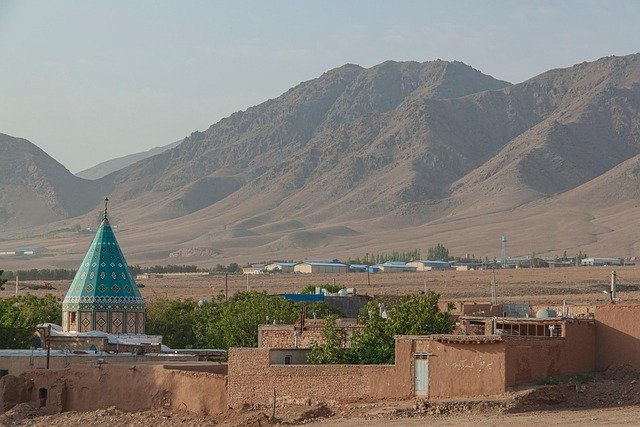
Sayyid ʿAlī Muḥammad: From Merchant to the Bāb
Following this declaration, one of Sayyid Kāẓim Rashtī’s disciples, Mullā Ḥusayn, set out in search of the Mahdi and arrived in the Iranian city of Shiraz. There, he encountered a twenty-four-year-old young man merchant, Sayyid ʿAlī Muḥammad Shīrāzī, who invited Mullā Ḥusayn to his home as a guest. During dinner that night, Sayyid ʿAlī Muḥammad revealed what he described as a secret: since one thousand years had passed since the occultation of the Twelfth Imam, the time for his manifestation had arrived, and that he himself—Sayyid ʿAlī Muḥammad—had been appointed as the Bāb, the gateway or intermediary to Imam al-Mahdi.
Mullā Ḥusayn then asked him several critical questions and concluded that this was indeed the Bāb of the Mahdi, exactly as the signs described to him by his spiritual guides, Sayyid Kāẓim Rashtī and Shaykh Aḥmad al-Aḥsāʾī, had indicated. As a result, Mullā Ḥusayn accepted the claim of the Bāb and became his first follower.
The Bāb’s Early Writings and Pilgrimages to Mecca and Karbala
After this, Sayyid ʿAlī Muḥammad wrote a book titled Qayyūm al-Asmāʾ, in which he claimed that he was the gateway or Bāb to the Hidden Twelfth Imam. As a result, the Shaykhī movement split into two factions: one group began to follow the Bāb and came to be known as Bābīs, while the other rejected the Bāb’s claim and continued along the mainstream Shaykhī tradition. The Shaykhī movement continues to exist to this day, particularly in Iraq.
Sayyid ʿAlī Muḥammad then traveled to Mecca, where, standing before the Kaʿbah, he publicly declared that he was the Bāb of the Mahdi, whose advent Islam had promised. Many of his followers were present with him at this occasion. From Mecca, he also traveled to Karbala, a stronghold of Shiʿa Islam, where he visited the shrine of Imam Ḥusayn.
After these journeys, he returned to Iran and continued his secret preaching. However, his message—particularly through his written works—soon began to circulate publicly and reached both the general population and the scholars of Twelver Shiʿa Islam. As a result, Shiʿa religious scholars began to raise serious questions regarding the legitimacy and truthfulness of the Bāb’s claims.
Growing Popularity and Opposition from Shiʿa Scholars
The Shiʿa scholars began searching for him, but the Bāb initially kept his identity concealed. On one occasion, however, a zealous follower of the Bāb, while calling the adhān (call to prayer), added words announcing the arrival of the Bāb of the Mahdi into the traditional formula. Upon hearing this, people in the surrounding area realized that the claim of being the Bāb of the Mahdi had in fact been made by Sayyid ʿAlī Muḥammad Shīrāzī. This revelation deeply angered the Shiʿa scholars, who reacted with strong hostility to his claim.
The Bāb subsequently intensified his preaching. On the one hand, a segment of Shiʿa scholars and the general public strongly criticized and opposed him; on the other hand, many Shiʿa believers—including some religious scholars—came to believe that he was indeed the gateway to the Hidden Twelfth Imam and thus accepted Bābism.
ersecution and Early Conflicts with the Qajar Monarchy
As the popularity of the Bāb continued to grow, the Qajar monarchy, in 1846, imprisoned Mīrzā ʿAlī Muḥammad, the Bāb, in a prison located in the regions near the Azerbaijani border.
During this period, the general population became sharply divided. On one side stood the followers of traditional Twelver Shiʿa Islam, while on the other were the Bābīs, who frequently clashed with their opponents over the Bāb’s claims. In the midst of these tensions, a prominent Shiʿa scholar, Mullā Muḥammad Taqī, was killed by Bābī followers. This incident further inflamed Twelver Shiʿa scholars and adherents, leading to even harsher repression and condemnation of the Bābīs.
Major Shift: Claiming Spiritual Imamate and Prophethood
In 1848, a major turning point occurred in Bābī teachings when the 28-year-old Sayyid ʿAlī Muḥammad declared that he himself was Imam al-Mahdi. This claim further enraged the followers of Twelver Shiʿa Islam, who argued that it is the Hidden Twelfth Imam, Imam Muḥammad, who is destined to appear as the Mahdi—not someone named Sayyid ʿAlī Muḥammad. In response, Sayyid ʿAlī Muḥammad claimed that the physical return of the Twelfth Imam was not possible. Instead, he asserted that he himself was the Mahdi in a spiritual sense, the very figure whom people had been awaiting.
Along with this claim, he also proclaimed prophethood and stated that he was an incarnation of God.
While still in imprisonment, Sayyid ʿAlī Muḥammad authored his famous book, the Bayān, which Bābīs regard as their most sacred scripture. In it, the Bāb declared the abrogation of all Islamic laws and announced a new form of religious law—his own system of Bābism.
Following these declarations, many people once again abandoned his movement, while at the same time thousands of others entered his new religion, accepting his final claims.
Imprisonment, Execution, and the Bāb’s Final Miracle
When the Qajar monarchy observed the growing unrest within the country—and saw that large numbers of people were joining the Bābī movement, with some even making armed preparations to free the Bāb from prison—the Shah came to regard the movement as a serious threat to his rule.
In this context, Mullā Ḥusayn, the first follower of the Bāb and the individual who had initially identified him as the Bāb of the Mahdi, gathered around 300 Bābī followers in 1849. Armed and determined, they set out to rescue the Bāb from imprisonment. However, the Shah’s forces surrounded them in a fortress along the way, and eventually Qajar troops killed Mullā Ḥusayn along with all his followers.
In 1850, the provincial governor Amīr Kabīr announced that Sayyid ʿAlī Muḥammad would be sentenced to death for introducing a new religion.
Finally, on 9 July 1850, Sayyid ʿAlī Muḥammad was executed by a firing squad. At the time of his execution, he was only thirty years old.
On this occasion, Bābī followers believe that their Mahdi displayed a final miracle. According to their account, when he was first subjected to gunfire before a large crowd, he suddenly disappeared from the scene. When he was searched for, he was reportedly found inside the prison, seated in a barrack and delivering his final counsel to one of his followers. He was then arrested once again and brought back before the firing squad. At this point, the soldiers—frightened by what they perceived as a miracle—refused to fire a second time.
As a result, those soldiers were removed and a new firing squad was assembled, which then opened fire and killed him. After his execution, his body was discarded outside the city. However, later that night, his followers secretly recovered his body and concealed it. According to Bābī tradition, his remains were hidden for nearly fifty years.
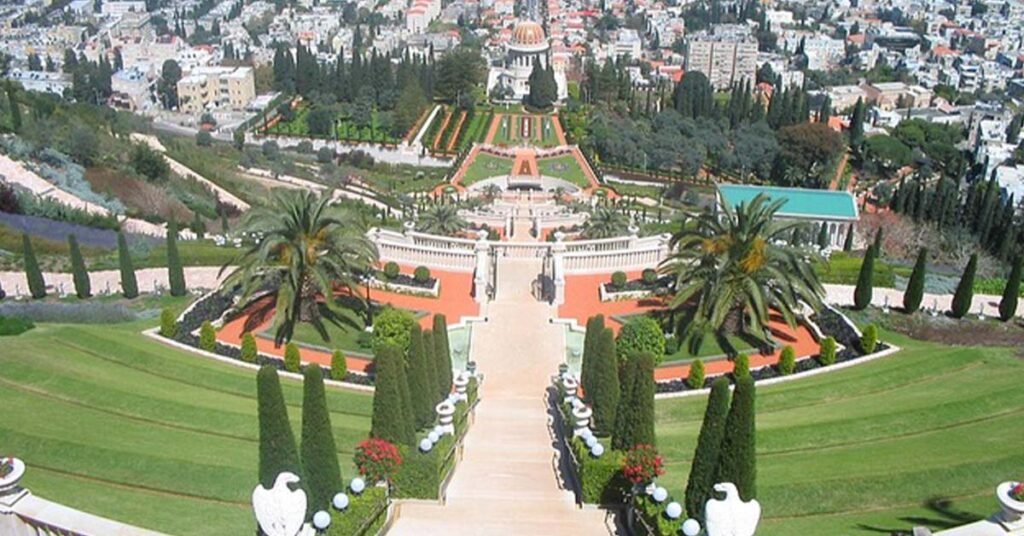
Eventually, his followers transported his remains to Palestine, where he was buried in the Carmel Mountains near the city of Haifa. This area is today under Israeli control.
However, before his execution, Sayyid ʿAlī Muḥammad, the Bāb, wrote and declared that after him, another incarnation of God would appear.
Legacy of the Bāb and the Emergence of the Bahāʾī Faith
The Bābī movement was soon to enter another crucial and highly significant phase. As we have explained in the next part, after the Bāb’s death, the question of succession led to a split within the Bābī movement between two brothers. We have examined how one brother emerged as Bahāʾuʾllāh, transforming Bābism into what later became known as the Bahāʾī Faith, while the other brother, Ṣubḥ-i Azal, preserved the Bābī identity of the movement.
All of this is discussed in the next part of the article. Click here to read the next part of the article.
References:
1. Momen, Moojan. The Baha’i faith: a short introduction. Oneworld Publications, 1999.
2. Smith, Peter. An introduction to the Baha’i faith. Cambridge University Press, 2008.
The Day the Shroud Was Torn: Imam Khomeini’s Emotional Funeral
Mirza Ghulam Ahmad’s Life and Claims: Messiah, Mahdi, and Early Ahmadiyya Movement
1 thought on “Who Was the Bāb? Origins of Bābism and the Bahāʾī Faith in 19th Century Iran (Part 1)”